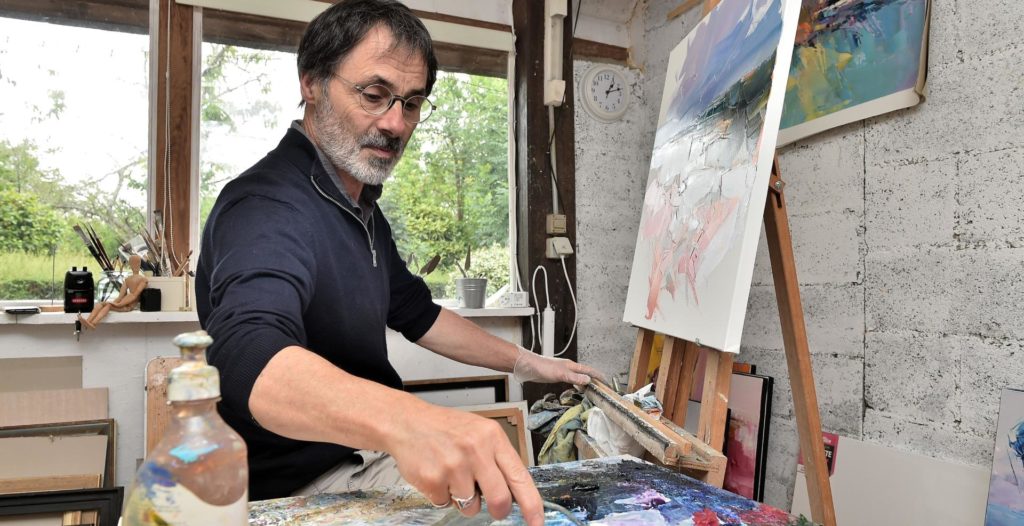
A painter’s studio holds more than the work people see. Alongside the large canvases, the ones that take weeks, that demand and consume, there is usually another body of work, quieter and less announced. In Hervé’s studio, that other work takes the form of small paintings. Studies. What French artists have long called pochades: quick impressions seized from the moment before it disappears.
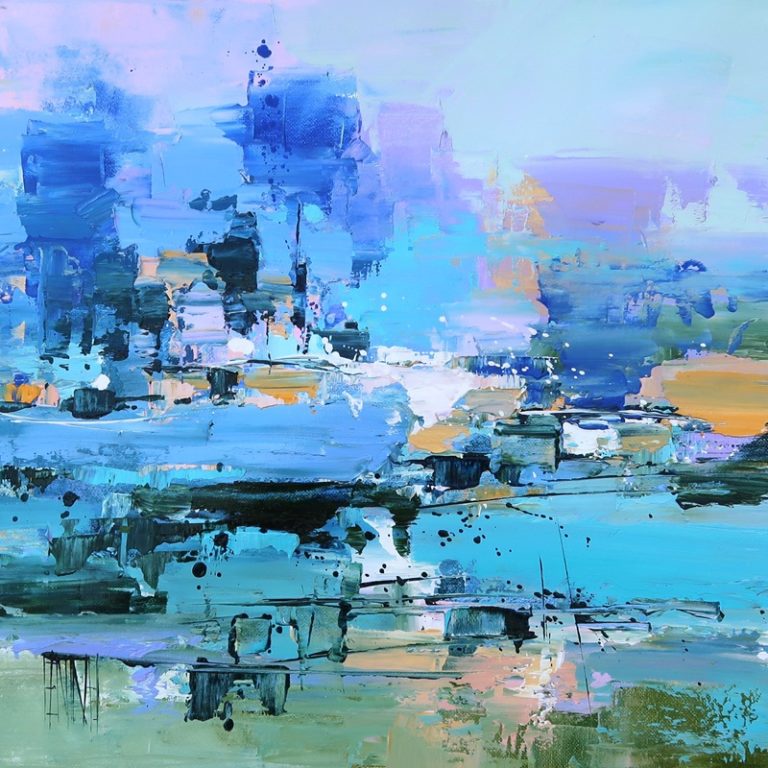
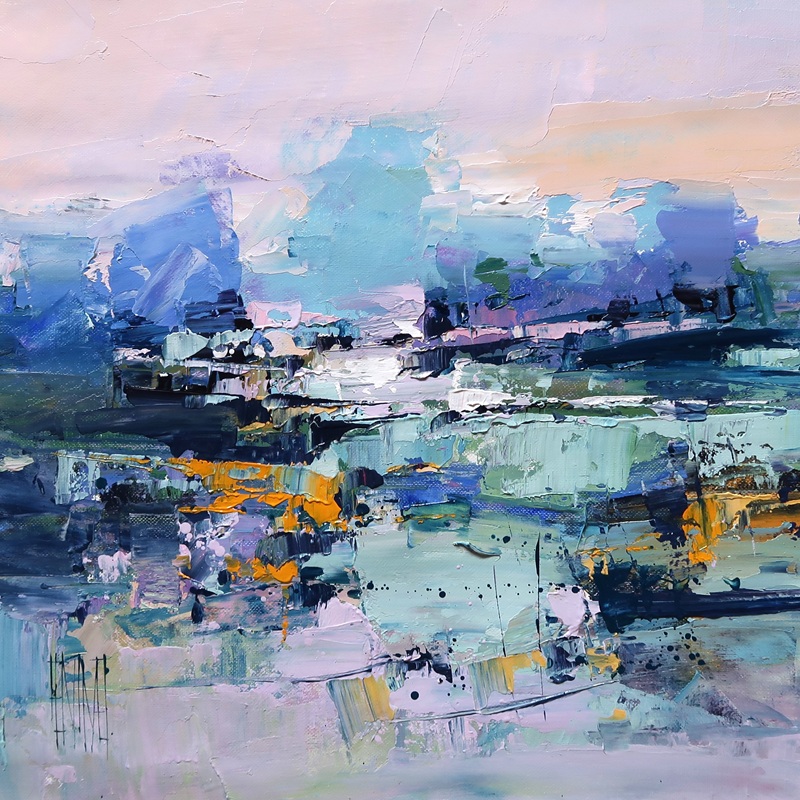
Pochade Soft Wilderness - 15x15in / 40x40cm
When the hand moves before the mind does
In his large-scale works, Hervé composes. He weighs, considers, builds. The canvas becomes architecture.
In these smaller formats, something different takes over. The scale itself removes the weight of consequence — there is less to lose, and so there is more to risk. The knife moves before the thought arrives. A mark is laid, scraped, built up. Another passage answers it. The painting assembles itself in what Hervé describes as a fragile balance between energy and stillness.
This is where instinct outpaces calculation. Where a single knife stroke or a scraped-back surface can carry more presence than a carefully planned passage twice its size.
A palette caught in its first breath
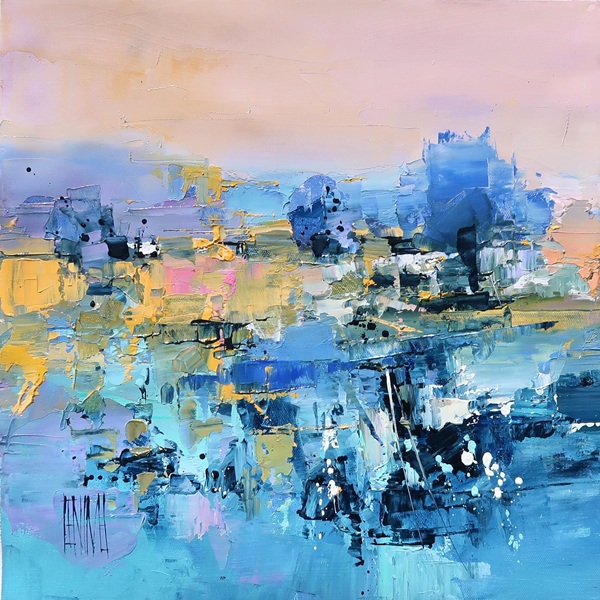
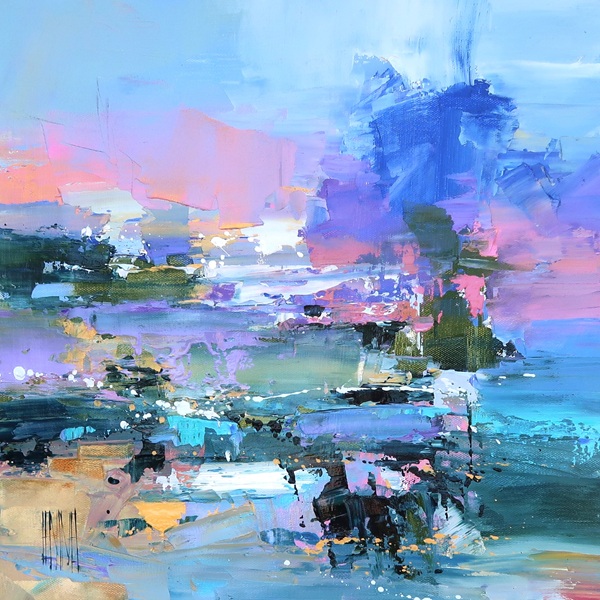
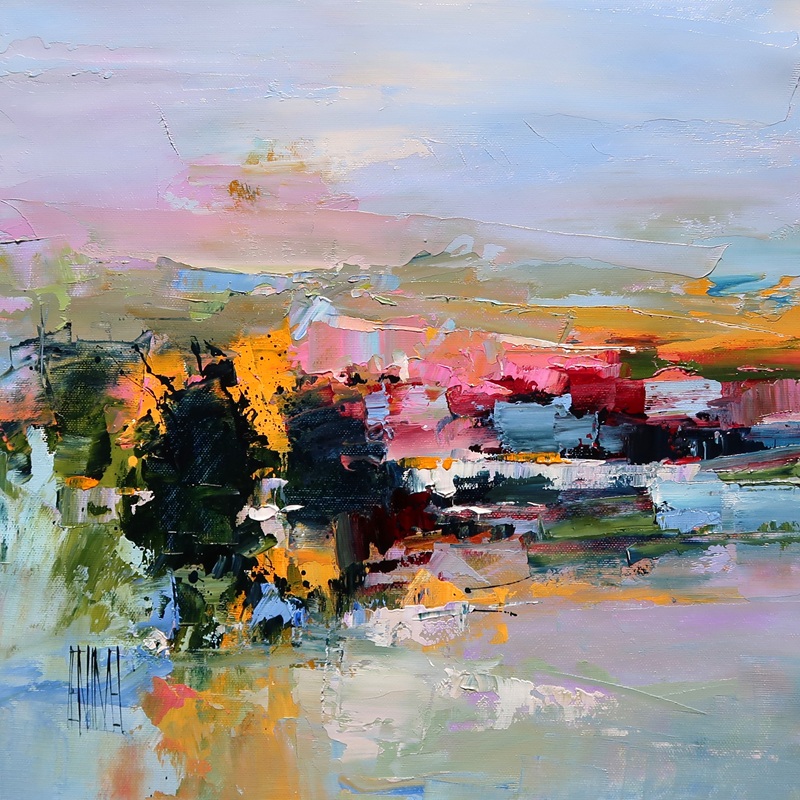
The colors that run through all of Hervé’s work reappear here, but rawer, less mediated. Deep velvety blues. Luminous turquoises. Sandy ochres and warm beiges. The occasional pale pink or delicate violet that quietly unsettles the harmony.
In the small works, these colors are captured in their initial impulse. They haven’t been reconsidered. The impasto catches light at the edges. Scraped passages sit next to thick deposits of color. You can read the sequence of decisions directly off the surface and that transparency is part of what gives them their particular charge.
They evoke something between sky and water, between light and memory. Atmospheres that feel almost weightless.
Pochade Dreaming Light
Pochade Luminous Silence
Pochade The Quiet Passage
Small paintings, long afterlife
Pochade Between Rose and Sky
What Hervé has noticed, and what collectors who live with these works discover, is that the freedom in a small study doesn’t stay small. It travels. The directness of a pochade has a way of finding its way back into the larger canvases, like a reminder of what painting can feel like when it isn’t afraid of itself.
Presented under glass, or stretched on canvas, they settle naturally into a room. Not as decoration. More like a window, or a pause. A breath of color that shifts the air around it.
There is something quietly radical about taking the small works seriously. About recognizing that scale and importance are not the same thing.
Hervé’s pochades earn their place not in spite of their modesty, but because of it.